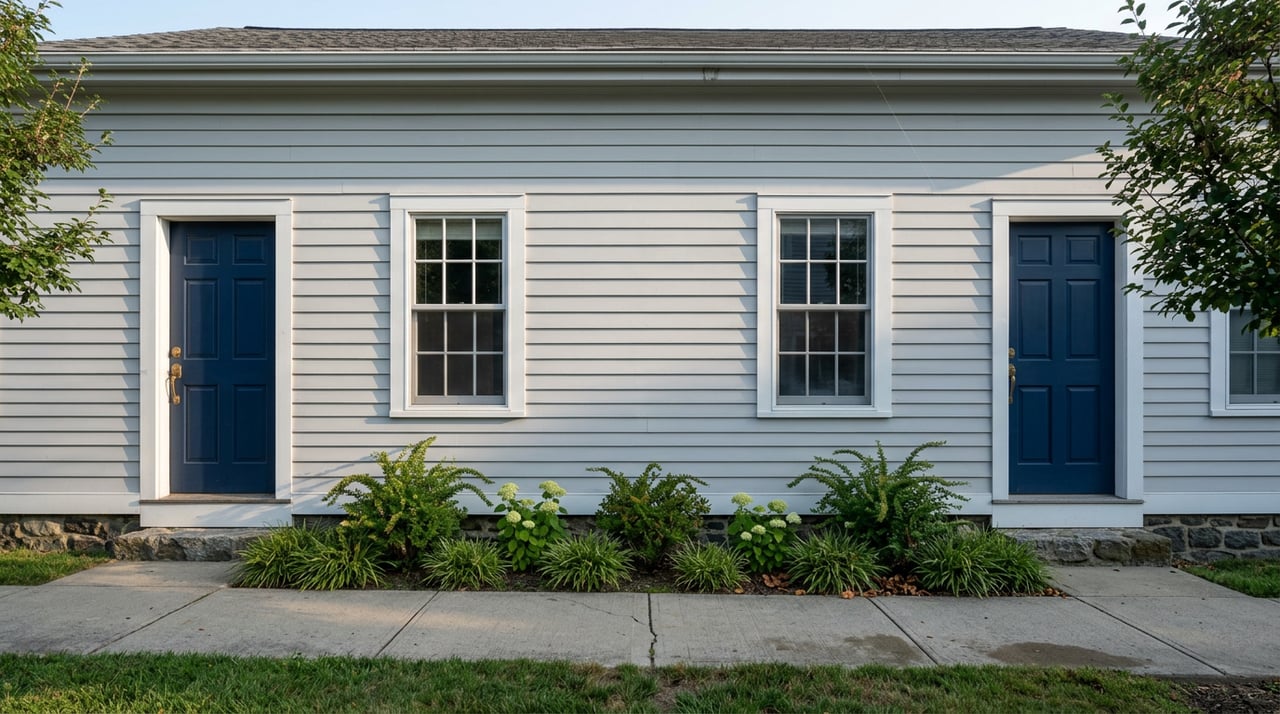
Why do Woburn multi-family listings that sell in under a month, often with multiple offers on the table, still fall apart three or four weeks later, once the buyer is already under agreement?
The answer has less to do with price and more to do with age. A large share of Woburn's two- and three-family stock includes early-1900s builds, and the systems inside those buildings, the wiring, the fuel storage, the pipe under the street, don't show up in a listing photo. They show up when a lender pulls the file or an inspector opens a wall. In a market built for speed, that timing mismatch is the thing that actually decides whether a deal reaches the closing table.
The Market Rewards Speed, And Buyers Are Paying For It
Redfin's May 2026 read put Woburn's median sale price at $764,542, up 2.0 percent year over year, with homes going pending in around 29 days. The market there scores as very competitive, and the same report notes that many homes draw multiple offers, some with waived contingencies. Movoto's July 2026 figures, the most recent available as of this writing, show median list prices actually softening, down 8 percent from June and 7 percent from a year earlier, even as days on market held steady at 29.
Put those two things together and a pattern emerges: sellers are pricing to spark competition, not to reflect a ceiling, and buyers are responding by offering to close faster and give up more protection along the way. That's a reasonable strategy in a lot of markets. It's a risky one on Woburn's older multi-family inventory, because the exact protections buyers are waiving are the ones built to catch the exact problems this housing stock tends to have.
What A Listing Shows Versus What Actually Surfaces
| What you see in the listing | What surfaces after you're under agreement |
|---|---|
| Renovated kitchen, refinished floors, updated bath | Original electrical service still feeding half the panel |
| "Recently updated systems" in the remarks | No documentation of when the boiler or wiring was actually replaced |
| No mention of oil heat | A capped fill pipe on the foundation wall that nobody disclosed |
| Move-in ready staging photos | A sewer lateral that hasn't been scoped since it was installed |
None of this is deception. Most sellers genuinely don't know what's behind their own walls. It just means the buyer's actual due diligence starts where the marketing photos end.
The Three Things That Actually Stall These Closings
Knob-and-tube wiring
Knob-and-tube wiring was the standard method for running electricity through New England homes built before 1950, using porcelain knobs and tubes to guide single-insulated copper conductors through the framing. It was well made for its era. It also has no ground wire, and the cloth and rubber insulation around it becomes brittle with age. Massachusetts home inspectors note that a growing number of mortgage lenders now decline to finance homes with active, live knob-and-tube wiring, and some insurers won't write a policy until it's replaced. If your inspector finds it and your loan officer flags it in the same week, you're now negotiating a rewire, typically a one- to two-week job for a licensed electrician on a home this size, while your rate lock clock keeps running. Building code also restricts covering this wiring with insulation, so an attic that was recently re-insulated for efficiency can turn into its own separate finding.
Buried oil tanks
A lot of Woburn's older multi-families were heated with oil before conversions to gas, and it wasn't unusual for the old tank to stay in the ground once the switch was made. Massachusetts General Law Chapter 21E holds property owners liable for cleanup if an oil release is discovered, and a state-regulated method exists to carbon-date contaminated soil back to whichever ownership period caused it, which is exactly how liability gets assigned when a tank surfaces mid-transaction. Separately, MGL Chapter 21O governs the permits and inspections required to remove a tank properly, and MassDEP's UST program oversees registration and closure of these systems. Buyers can check with the local fire department for removal permits and request a tank closure report before they're deep into financing, not after.
Aging sewer laterals
The same buildings that still have original wiring often still have original sewer connections, and a lateral that hasn't been camera-scoped in decades is a common source of last-minute repair estimates. It rarely kills a deal on its own, but combined with an electrical finding and a possible tank, it adds up fast in a transaction where the buyer already waived the right to walk away over any one of them.
Winning The Bid And Winning The Deal Are Different Games
A fast, contingency-light offer is optimized to beat the other bidders to a signed purchase and sale agreement. It is not optimized to survive underwriting on a hundred-year-old building. Those are two different contests, and the advice that wins the first one, move fast, waive what you can, is precisely what increases your exposure in the second.
That doesn't mean slowing down and losing the property. It means moving the diligence earlier, before the offer goes in, so speed and safety stop being opposites.
A Pre-Offer Checklist That Works Even When You Can't Waive Everything
- Ask the listing agent directly whether the electrical panel and any visible wiring have been updated, and request photos of the panel before you tour
- Look at the exterior foundation walls and yard for a capped or visible fill pipe, and ask the seller in writing whether the property was ever heated with oil
- Request any available fire department fuel storage permits or tank closure reports before you write the offer, not after
- Get a rough quote from a licensed electrician for a full rewire so you know the number before it becomes a renegotiation
- Ask whether the sewer lateral has ever been camera-scoped, and if not, budget for it as part of your inspection window
- Confirm with your lender in advance how they treat knob-and-tube wiring, since underwriting standards vary by institution
None of this slows down your offer. It just moves the information you'd otherwise get during the inspection period to the week before you write the number.
What This Looks Like Next To New Construction
Not every option in Woburn carries this profile. New construction at developments like Highland at Vale, near Route 93 and Montvale Avenue, comes with none of it: no original wiring, no legacy fuel tank, no unscoped lateral. That's part of why new construction commands a premium over the city's older multi-family stock. It's also why buyers who are specifically chasing the cash-flow math of an older two- or three-family need to price the inspection risk into their offer strategy rather than pretend it isn't there. You're not choosing between a good deal and a risky one. You're choosing which risks you're taking on, and at what price.
FAQ
Can I still waive my inspection contingency on a Woburn multi-family? You can, but on a pre-1950 two- or three-family, that decision carries more weight than it would on a newer property. Doing the fire department and lender legwork before you write the offer gives you most of the protection an inspection contingency would, without slowing down your timeline.
Does a clean home inspection mean there's no oil tank? Not necessarily. A visual inspection can miss a capped or buried tank entirely. If the home was ever heated with oil, a fill pipe or fire department permit record is worth checking regardless of what the general inspection turns up.
Woburn's older multi-family stock still makes sense for buyers who understand what they're underwriting. The properties that cause the fewest surprises are the ones where the wiring, the tank question, and the sewer line got checked before the offer went in, not after.
If you're looking at a two- or three-family in Woburn and want a second set of eyes on the diligence before you write the number, Vahan Sardaryan is glad to help. Schedule a free consultation.