Buying in Woburn often means choosing between two very different kinds of houses: the older Colonial with its formal layout and classic street presence, or the postwar split-level built for a different era of daily life. If you are trying to decide which style fits your budget, renovation plans, and long-term goals, it helps to understand how each home was designed to work. This guide breaks down what to look for in Woburn’s Colonial and split-level homes, where the value often is, and what due diligence matters most before you move forward. Let’s dive in.
Why These Two Styles Matter in Woburn
Woburn’s housing stock reflects both deep New England roots and a major period of postwar growth. The city’s official history notes that Woburn includes nearly every traditional New England architectural style, while planning materials describe a relatively old housing stock with many pre-war homes and a big building surge in the 1950s.
That mix makes Colonials and split-levels especially relevant for today’s buyers. Woburn is still mostly owner-occupied at 55.7%, and the median owner-occupied home value is $673,500. For many single-family buyers, these two styles are key comparison points because they often offer very different layouts, upkeep needs, and renovation paths.
Colonial Homes in Woburn
What a Colonial Usually Looks Like
In New England, Colonial and Colonial Revival homes are often easy to spot once you know the basics. They tend to have a symmetrical front, a central entrance or hall, and a simple, balanced shape.
Earlier examples often centered around a chimney, while later versions commonly used a five-bay design with a centered front door and straight stair. Colonial Revival homes often added more formal details, including pediments, columns, and other Georgian-inspired elements. Inside, the layout usually revolves around central circulation, with rooms arranged evenly around a hallway and staircase.
Why Buyers Still Love Colonials
A Colonial often appeals to buyers who want clear room separation, traditional curb appeal, and a layout that feels grounded and familiar. In Woburn, that can mean an older home with character, established detailing, and a street presence that fits the city’s older neighborhoods.
These homes also tend to reward thoughtful updating. Because the core design is based on symmetry and circulation, improvements often work best when they support that structure rather than fight it.
Best Update Opportunities for Colonials
In many Colonials, the strongest improvements are selective. Instead of fully reworking the house, buyers often get better results by improving the kitchen and bath flow, creating a more functional rear entry or mudroom, adding family space, and updating major systems.
The key is to preserve the home’s basic architectural logic. Preservation guidance supports change, but it also suggests that additions should respect the original character, often by placing them at the rear and making them distinguishable from the original house.
What to Watch Before You Buy a Colonial
Because many Colonials are older, due diligence matters. Lead paint is one of the biggest issues to keep on your radar. According to EPA data cited in the research, 87% of homes built before 1940 and 24% of homes built from 1960 to 1978 have some lead-based paint.
Massachusetts requires a Property Transfer Lead Paint Notification for pre-1978 home sales. If a child under 6 will live in the home, state law requires deleading or interim control within 90 days of taking title. Massachusetts also requires lead-safe renovation practices when a paid project disturbs more than 6 square feet of interior painted surface per room or 20 square feet on the exterior.
Inspection expectations matter too. In Massachusetts, a home inspection is visual and limited to accessible structure and major systems. It is not a code inspection and not a warranty, which is why buyers should consider whether they also need testing for lead, radon, termites, water quality, or mold.
If the house is more than 75 years old, there is one more local step to keep in mind. Woburn’s Historical Commission reviews properties over 75 years old for possible historical value and files inventory reports with MACRIS, so it is smart to check that status before planning exterior changes or additions.
Split-Level Homes in Woburn
What a Split-Level Usually Looks Like
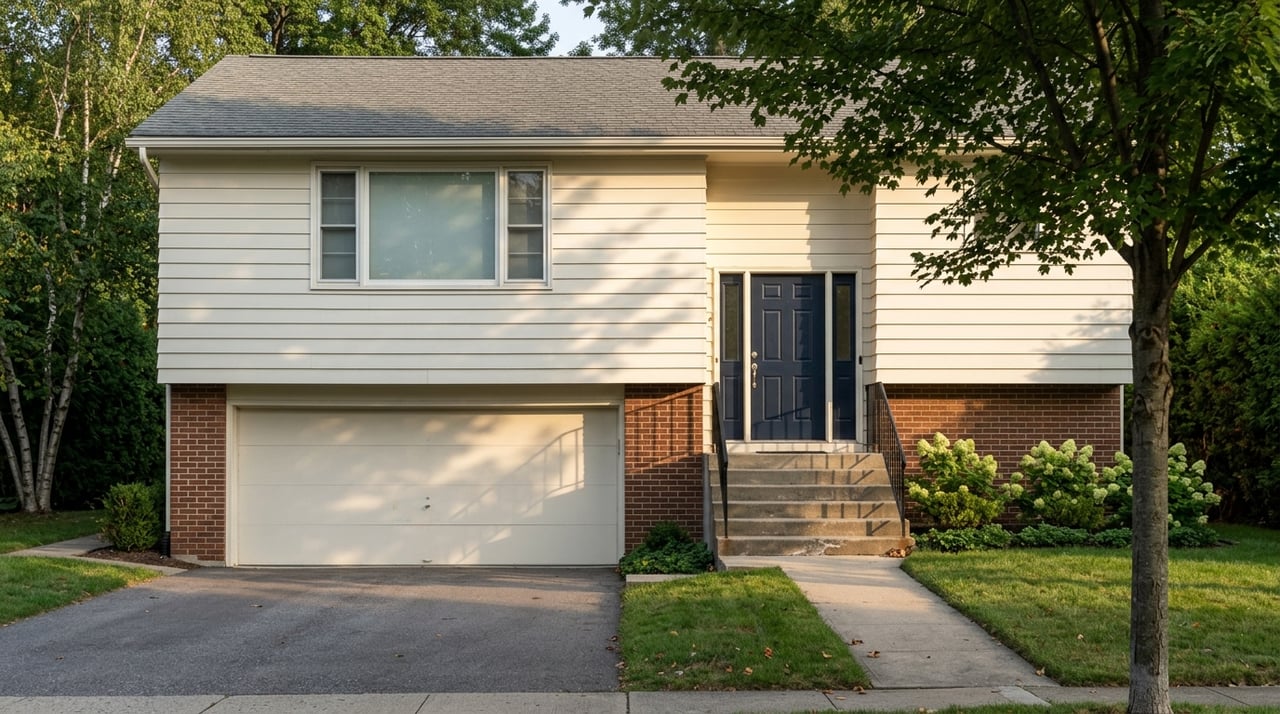
Split-level homes came out of the mid-century suburban era and are shaped by function more than formality. They typically have staggered half-levels, or a two-story wing connected to a one-story section.
The usual layout places the family room and garage on the lower level, the kitchen, dining, and living space on the middle level, and the bedrooms on the upper level. Many are brick or brick-and-wood, and the design worked especially well on compact or sloping lots.
Why Split-Levels Fit Woburn
Woburn’s major growth spurt in the 1950s makes split-levels especially relevant in the local market. If you are touring neighborhoods shaped by postwar expansion, you are likely to see this style come up again and again.
For many buyers, the appeal is practical. Split-levels often provide a separate lower-level flex space, attached garage access, and a more casual flow than an older Colonial. That can be a real advantage if you want room to spread out without taking on a much larger footprint.
Best Update Opportunities for Split-Levels
A split-level often lends itself to staged renovations. Buyers commonly focus on opening the middle level, reworking the kitchen, improving storage and circulation, and finishing or repurposing the lower level.
The most successful renovations usually keep the stepped form intact. Like Colonials, split-levels tend to perform best when updates work with the house’s original structure instead of flattening it into something it was never designed to be.
What to Watch Before You Buy a Split-Level
With split-levels, the stairs are not just a detail. They are central to how the house functions every day. That means you should pay close attention to stair transitions, how easily the levels connect, and whether the layout feels practical for your household.
The lower level deserves extra scrutiny too. If a previous owner finished part of that space, converted a garage, or made other changes, confirm the permit history. In Woburn, Inspectional Services handles building, electrical, plumbing, and gas permits, and the city says work cannot proceed without a permit except for ordinary repair.
Lead paint can still be part of the picture here. A mid-century home is not automatically lead-free, and pre-1978 split-levels may still carry lead risk. As with Colonials, Massachusetts inspection guidance makes clear that the standard home inspection is limited and visual, so additional testing may still be worth considering.
Colonial vs. Split-Level: How to Compare Them
Think About Structural Logic
The biggest difference between these homes is how they are organized. Colonials are built around symmetry and central circulation. Split-levels are built around stacked functional zones.
That difference affects everything from furniture placement to renovation costs. If you prefer defined spaces and a more traditional floor plan, a Colonial may feel more natural. If you want separation between living, sleeping, and flex space, a split-level may fit better.
Think About Renovation Style
Colonials often reward improvements that protect the front-facing character while making the back of the house more livable. Split-levels often reward smarter use of the existing levels and better connection between them.
In other words, the best project is not always the biggest one. In Woburn, buyers often do better when they identify the house’s original strengths and build on those instead of trying to force a total redesign.
Think About Risk and Planning
Both home types can come with older systems, prior alterations, and permit questions. Older Colonials may raise more historic-review questions, while split-levels often raise more lower-level and circulation questions.
In both cases, your planning should start with verification. Confirm the year built, review permit history, and understand what your inspection will and will not cover before you commit to a renovation budget.
A Smart Buyer Checklist for Woburn
If you are comparing Colonials and split-levels in Woburn, use this checklist as a practical starting point:
- Verify the year built before assuming the home is simple to update.
- Check the state lead-history record for pre-1978 homes.
- Use a home-inspection clause and remember the inspection is limited to visible systems and surfaces.
- Consider whether you need additional testing for lead, radon, termites, water quality, or mold.
- Confirm permit history for finished basements, additions, dormers, garage conversions, and major mechanical work.
- If the property is 75 or more years old, check whether it appears in Woburn’s historic inventory before planning exterior changes.
- Build your renovation budget around the house’s original form rather than assuming a full reconfiguration will make the most sense.
The Bottom Line for Woburn Buyers
In Woburn, Colonials and split-levels can both be strong options, but they solve daily living in very different ways. Colonials tend to offer traditional structure, symmetry, and character. Split-levels tend to offer practical zoning, flexible lower-level space, and a layout shaped by postwar suburban life.
The right choice often comes down to how you want to live, how much updating you plan to do, and whether the house’s existing structure supports your goals. If you want help comparing homes, spotting value-add potential, and navigating inspections and local due diligence in Woburn, Vahan Sardaryan can help you build a smart, tailored plan.
FAQs
What defines a Colonial home in Woburn?
- A Colonial in Woburn typically has a symmetrical exterior, a central entrance or hall, and a layout organized around central circulation and evenly arranged rooms.
What defines a split-level home in Woburn?
- A split-level in Woburn usually has staggered half-levels, with living areas on the middle floor, bedrooms above, and a lower level often used for a family room or garage access.
Are Woburn Colonial homes harder to renovate?
- Woburn Colonial homes are not always harder to renovate, but they often benefit from selective updates that preserve the front façade and overall architectural character.
Do Woburn split-level homes have renovation potential?
- Woburn split-level homes often have solid renovation potential, especially for middle-level kitchen updates, lower-level reconfiguration, and storage or circulation improvements.
Should buyers worry about lead paint in Woburn homes?
- Buyers should take lead paint seriously in pre-1978 Woburn homes, because Massachusetts requires lead disclosures and certain renovation work may trigger lead-safe practices.
What should buyers check before updating an older Woburn home?
- Buyers should check the year built, lead history, permit history, inspection findings, and whether a home over 75 years old may be part of Woburn’s historic inventory.