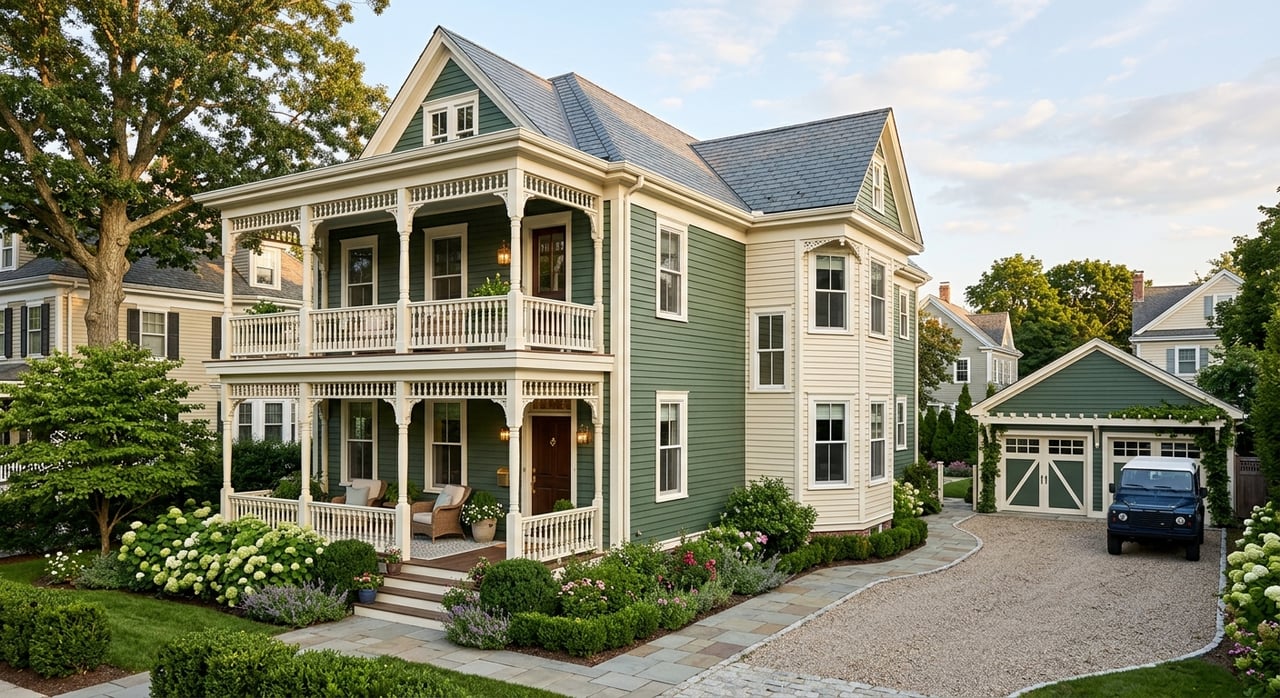
If you price a Watertown multi-family like a generic house, you can leave serious money on the table or scare away the right buyers. Selling a two-family or three-family here comes with a different set of pricing rules because buyers are looking at unit layout, rental appeal, parking, and condition all at once. When you understand what actually drives value in this market, you can price with more confidence and a better chance of attracting strong interest early. Let’s dive in.
Why pricing a Watertown multi-family is different
A multi-family property is not valued the same way as a standard single-family home. In Watertown, buyers often compare your property to other two-families and three-families based on size, condition, parking, and how usable each unit feels.
That matters because recent sales show a wide pricing range. Smaller or more basic properties sold below $1 million, while larger, more updated, and better-parked properties moved well into the $1 million to mid-$1 million range.
Watertown’s broader housing market also remains active. Zillow reported an average home value of $842,508 as of April 30, 2026, a median sale price of $845,083 as of March 31, 2026, about 8 days to pending, and 71 homes for sale. That backdrop supports demand, but your pricing still needs to reflect the realities of the multi-family segment.
Start with the right comp set
The biggest pricing mistake is using the wrong comparison group. A dated two-family should not be priced like a gut-renovated two-family with oversized units, and a standard property should not be benchmarked against a premium outlier.
Recent Watertown sales make that clear. At the lower to middle end of the sample, 57 Prospect St, a 1,300-square-foot two-family duplex, sold for $830,000. Meanwhile, 7 Oliver Rd, a 2,208-square-foot two-family, sold for $1,000,000, and 18 Jewett St, a 2,817-square-foot two-family, sold for $1,270,000.
Larger multi-families sold even higher. 68 Barnard Ave, a 3,368-square-foot three-family, sold for $1,350,000, and 15-17 Porter St, a 3,391-square-foot multi-family, sold for $1,650,000. At the top end, 133-135 School St sold for $2,305,500, but that was a gut-renovated 5,518-square-foot two-family with unusually large units and should be treated as a premium outlier rather than a baseline comp.
What makes a comp truly relevant
The most useful comparable sales usually share several traits with your property:
- Similar unit count
- Similar square footage
- Similar level of renovation
- Similar parking setup
- Similar lot utility
- Similar layout and owner-occupant appeal
If your property has older kitchens, uneven floor plans, or deferred maintenance, the comp set should reflect that. If it has updated interiors, strong separation between units, and features that feel move-in ready, that can support a stronger price.
Condition sets the pricing ceiling
In Watertown, condition is one of the clearest value drivers for multi-family homes. Buyers will often pay more for a property that feels easy to occupy, rent, or manage right away.
The recent sales sample shows that renovated or high-amenity properties can command a significant premium over more standard homes. That does not mean every seller should chase the top of the market. It means your asking price should match what a buyer will actually see when they walk through the units.
A property that needs work can still sell in a fast-moving market. But if you price it as though it already has the finishes, layout, and ease of ownership of a renovated listing, buyers may hesitate or discount it quickly.
Signs your property may justify a premium
Your pricing may have more room if your multi-family offers:
- Updated kitchens and baths
- Clean, practical unit separation
- Larger or more flexible room counts
- Strong natural light and usable layouts
- Recent renovation work
- Appealing owner-occupied potential
Those features help buyers picture either immediate rental use or living in one unit themselves. That broader appeal can strengthen your pricing position, but only when the features are real and easy to see.
Parking matters more than many sellers think
In the Watertown multi-family market, parking shows up again and again in sold listings. It is not a minor detail. It is part of the value story.
Recent examples highlighted three parking spaces at 24-26 Louise St, off-street parking at 7 Oliver Rd, a large garage and ample driveway parking at 18 Jewett St, six total parking spaces at 68 Barnard Ave, and six driveway spaces at 15-17 Porter St. Even 57 Prospect St called attention to its two-car garage or barn and off-street parking.
That repeated pattern suggests buyers are paying attention to parking capacity and convenience. If your property offers a garage, multiple driveway spaces, or reliable off-street parking, that should be reflected in your pricing analysis and marketing presentation.
House-hackers expand the buyer pool
One reason Watertown two-families and three-families can attract strong demand is that the buyer pool is not limited to traditional investors. Owner-occupants are also active in this segment.
HUD says FHA loans are available on 1- to 4-unit properties and can require as little as 3.5% down. Freddie Mac also notes that its 2- to 4-unit mortgage products are for owner-occupied primary residences and that rental income from other units can be counted in qualifying income.
That means your likely buyer may be someone who wants to live in one unit and collect rent from the others. For pricing, that matters because these buyers are not only looking at income potential. They are also evaluating whether one unit feels like a home they would want to occupy.
Features that appeal to owner-occupant buyers
If you want to reach this broader buyer pool, these details can support price:
- A clearly preferable owner unit
- Good separation between units
- Practical bedroom and bath layouts
- A clean, move-in-ready feel
- Parking that works for multiple households
- Believable rental upside for the non-owner unit or units
This does not mean every multi-family should be priced aggressively. It means the best pricing strategy accounts for how both investors and owner-occupants may view the same property.
Rental trends support demand, not automatic pricing
Watertown’s rental market adds another layer to buyer demand. Zillow reported average rent of $2,991 in April 2026, up 2.5% year over year.
That helps explain why investor-minded buyers and house-hackers may stay interested in the local market. But rent trends alone do not justify a high asking price. Buyers still look closely at actual property features, unit quality, and whether the income story feels realistic.
A strong pricing strategy uses rental demand as context, not as a shortcut. The market still rewards concrete facts like condition, size, layout, and parking more than a broad narrative.
Watch location-specific supply changes
Watertown’s policy backdrop is also worth noting. The City of Watertown says the City Council approved a Housing Plan in 2021, adopted MBTA Communities-compliant zoning on November 14, 2024, and received a Commonwealth compliance determination on April 9, 2025.
The city also says the Watertown Square planning process includes zoning options that could expand housing capacity, though it does not mean all modeled units will be built. For sellers, that suggests future supply pressure may be uneven and more location-specific rather than citywide.
In practical terms, buyers may think differently about one area versus another, especially where future development or transit-oriented change is part of the local conversation. That does not create a pricing formula by itself, but it is another reason a hyper-local pricing approach matters.
A practical pricing approach for sellers
If you are preparing to sell a Watertown multi-family, the best pricing strategy usually follows a simple sequence. Start with the closest recent comps, then adjust for your property’s actual strengths and weaknesses.
Here is what that process should include:
- Review recent Watertown sales with similar unit count and size.
- Compare renovation level honestly.
- Factor in parking and garage utility.
- Consider how appealing the property is to an owner-occupant.
- Use rental demand as support, not as the main valuation method.
- Avoid pricing off a premium outlier unless your property truly competes with it.
This approach helps you avoid the two most common mistakes: underpricing a well-positioned property and overpricing a home that still needs work. In both cases, the goal is the same. You want a list price that makes sense the moment buyers compare your property to the alternatives.
Why tailored strategy matters
No two Watertown multi-families tell the same story. One may win on parking and lot utility. Another may stand out because of updated interiors or a layout that works well for an owner-occupant. Another may need a more measured price because the condition limits the buyer pool.
That is why a property-specific strategy matters more than broad averages. The right pricing plan combines real comps, realistic positioning, and marketing that speaks to how buyers actually evaluate small multi-family homes in Watertown.
If you are thinking about selling, a clear pricing strategy can help you protect your leverage from day one. For tailored guidance on your Watertown multi-family, schedule a free consultation with Vahan Sardaryan.
FAQs
How should you price a Watertown two-family home?
- You should price a Watertown two-family using recent sales with similar size, condition, parking, and layout rather than relying on a citywide average home price.
What affects Watertown multi-family value most?
- The biggest factors in Watertown multi-family pricing are condition, square footage, unit count, parking, layout, and whether the property appeals to both investors and owner-occupants.
Does parking increase a Watertown multi-family sale price?
- Recent Watertown sales suggest parking is an important value factor because many sold listings highlighted garages, driveway capacity, or off-street parking.
Can house-hackers buy a Watertown multi-family property?
- Yes. HUD says FHA loans are available on 1- to 4-unit properties, and Freddie Mac says its 2- to 4-unit products are for owner-occupied primary residences and may allow rental income from other units to help with qualification.
Should you use average Watertown home prices to price a multi-family?
- No. Average home price data can help you understand the broader market, but a Watertown multi-family should be priced against the closest comparable multi-family sales.
Do Watertown rental trends help support multi-family pricing?
- Watertown rental trends can help support buyer demand, but they do not replace a comp-based pricing strategy grounded in your property’s actual condition and features.