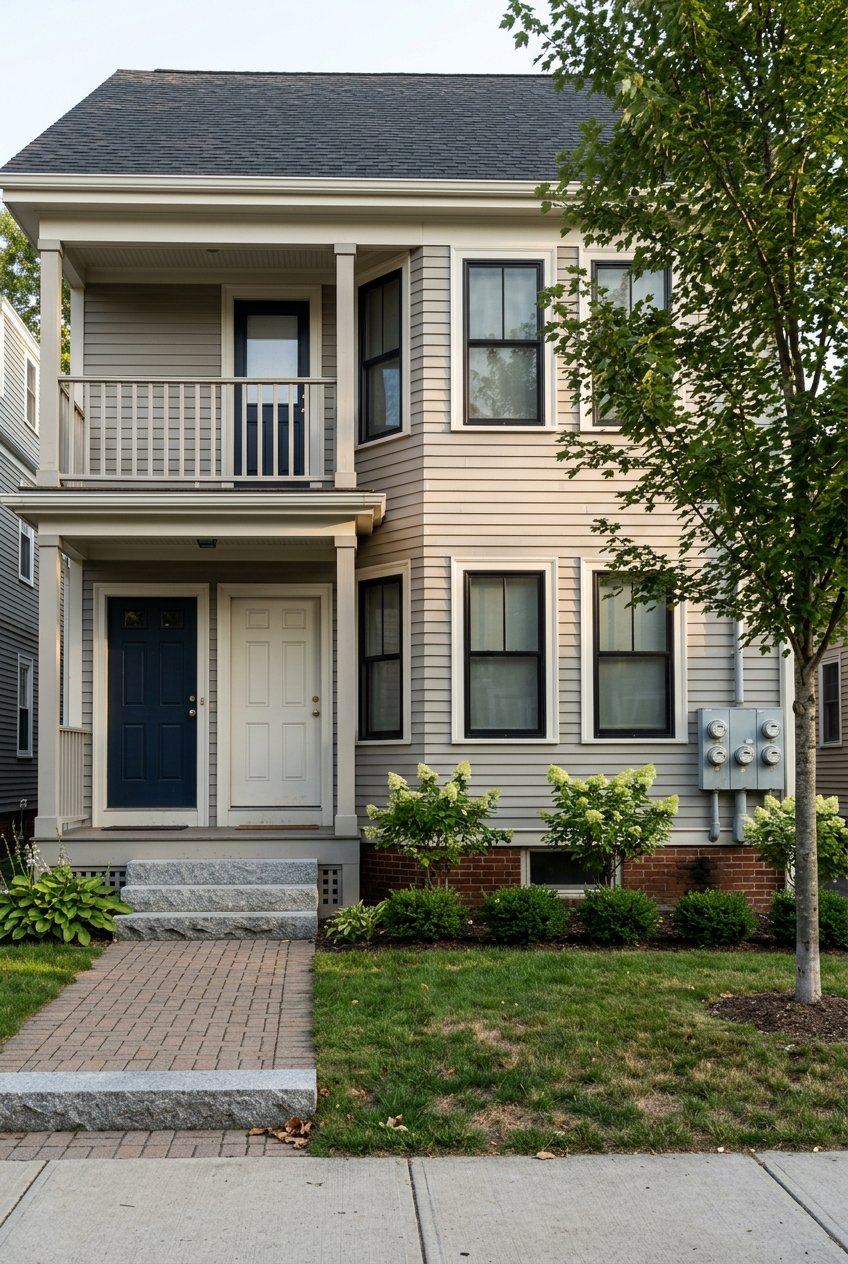
Thinking about buying your first investment and living in one unit to offset the mortgage? In Watertown, a classic two-family can be a smart way to start, but only if the numbers and rules work for you. Prices are higher than many suburbs, and older buildings can add surprise costs. In this guide, you’ll learn how Watertown’s rents, prices, financing, taxes, and regulations affect your decision, plus a clear underwriting checklist. Let’s dive in.
Why consider a Watertown two-family
Watertown is a built-out inner suburb with many pre-1940 wood-frame duplexes and small multi-unit buildings. That mix creates steady rental demand and regular opportunities for owner-occupants to house-hack. You will find a meaningful share of multi-unit housing across the 02472 footprint, which is why two-families often hit the market here. You can review housing and demographic context on the town’s profile page for a quick snapshot of the area’s composition and trends (DataUSA Watertown profile).
Expect premium pricing. As of February 2026, market summaries show the Watertown median sale price in the high $800,000s. Always verify with recent MLS comps and neighborhood-level data before you bid because medians can shift month to month (Redfin Watertown market overview).
Bottom line: Watertown can be an excellent first investment for owner-occupants who want location and stable rental demand, as long as you underwrite conservatively.
Rents and demand at a glance
Rental demand in Watertown benefits from proximity to Cambridge and Boston job centers. As of early 2026, market snapshots show typical one-bedroom rents often in the low to mid $2,000s to $3,000 range citywide, depending on unit condition and location. Use multiple sources when estimating rent for your specific units and date your assumptions (Zillow Rental Manager market trends for Watertown).
For underwriting, pull 3 to 6 recent comparable listings for each unit type and be conservative. A practical approach is to use 95 percent of market rent to reflect typical vacancy and concessions.
Financing paths that make two-units accessible
Owner-occupant financing is what often makes a Watertown duplex feasible for a first purchase. Here are the primary options to discuss with your lender.
FHA for 1–4 units
- FHA 3.5% down for qualifying owner-occupants on 1–4 unit properties.
- FHA 203(k) lets you combine purchase and renovation on owner-occupied 1–4 unit homes.
- For 3–4 units, FHA may require reserves and a self-sufficiency test. Confirm details early with an FHA-approved lender (FHA multifamily rules overview).
Conventional with as little as 5% down
- Since late 2023, Fannie Mae’s automated underwriting can allow 5% down for owner-occupied 2–4 unit purchases, subject to lender overlays like credit score, PMI, and reserves.
- This can be a strong alternative to FHA for many buyers. Work with a lender who regularly underwrites small multi-family loans (Fannie Mae 5% down update explainer).
VA for eligible borrowers
- Many eligible veterans can finance 1–4 unit owner-occupied properties with zero down, subject to program rules and lender overlays. Confirm specifics with a VA lender.
Know your 2026 loan limits in Middlesex County
For Middlesex County, conforming loan limits in 2026 are higher than the national baseline:
- One-unit: $962,550
- Two-unit: $1,232,250
- Three-unit: $1,489,500
- Four-unit: $1,851,100
Check limits for the property address before you finalize your financing plan. Above these amounts, you will need jumbo or non-conforming products (FHFA 2026 county loan limits table).
Practical lender expectations
Plan to document your down payment source and be prepared for reserve requirements. Many owner-occupied 2–4 unit programs expect several months of PITI available after closing, and lenders may have their own overlays on top of program rules. Get pre-approved with language that specifically covers multi-unit underwriting (owner-occupied multi-unit expectations).
Taxes, rules, and landlord obligations in Watertown
Property taxes and the residential exemption
Watertown’s FY2026 residential tax rate is $12.20 per $1,000 of assessed value for July 1, 2025 through June 30, 2026. If you will live in one unit as your primary residence, review the town’s residential exemption, which can reduce the tax bill for owner-occupants. Always calculate property taxes using the current assessed value and confirm whether the exemption applies after purchase (Watertown Assessing and FY2026 info).
Short-term rentals
Watertown has clarified that short-term rentals for less than 31 days are not permitted under current zoning and are being enforced. Treat your two-family as a long-term rental opportunity unless a regulatory change is confirmed (Watertown announcements on STR policy).
Lead safety and security deposits
For pre-1978 homes, Massachusetts lead law requires specific disclosures and may require deleading or approved containment measures. Security deposits are tightly regulated under Chapter 186 Section 15B, including rules on separate accounts, interest, and timelines for returns. Non-compliance carries penalties, so factor compliance time and cost into your plan (Massachusetts tenant lead law information).
How to underwrite a Watertown two-family
Underwriting protects you from surprises and helps you compare properties with confidence. Use this simple, repeatable process.
Step 0: Define your strategy
Decide whether you will house-hack as an owner-occupant or buy as a non-occupant investor. Owner-occupant status affects loan options, reserve requirements, and tax treatment such as the local residential exemption (FHA multi-unit overview for context).
Step 1: Identify comparable rents
- Pull 3 to 6 recent comps for each unit type using multiple sources.
- Use a conservative effective rent assumption at or below 95 percent of market to account for vacancy and turn costs.
- Start with current market pages for direction, then confirm with local listings and property managers (Watertown rental market trends).
Step 2: Estimate expenses
- Property taxes: multiply the current assessed value by Watertown’s FY2026 rate of $12.20 per $1,000 and adjust if a residential exemption may apply (Assessing and FY2026 info).
- Insurance: get a local duplex quote; coverage and cost vary with building age and updates.
- Utilities: confirm who pays heat, hot water, electricity, and water/sewer for each unit.
- Maintenance and repairs: reserve for ongoing upkeep; older New England stock can require higher reserves.
- Vacancy: model at 7 to 10 percent for stress testing in tight Boston suburbs.
- Property management: budget 8 to 10 percent of collected rent if you will not self-manage.
Step 3: Model cash flows
- Calculate Gross Scheduled Rent, less Vacancy, to get Effective Gross Income.
- Subtract Operating Expenses to find Net Operating Income.
- Subtract mortgage principal and interest to see pre-tax cash flow.
- Add a capital expenditure reserve and a 6 to 12 month contingency for major systems like roof or heating.
Step 4: Plug in financing inputs
- Use lender-quoted rates and payments for FHA or conventional owner-occupied loans.
- Confirm reserve requirements and whether projected rental income can count toward qualification. Conventional automated systems for owner-occupied 2–4 units often allow projected rents, subject to lender overlays, and FHA has specific rules for 3–4 units including a self-sufficiency test (FHA multi-unit overview).
Step 5: Legal and title checks
- Verify existing leases, rents, and tenancy type.
- Check for code violations, open permits, and zoning or use history.
- Confirm that any accessory units or past conversions were permitted.
- Pull the Watertown parcel record and coordinate with the Building and Zoning office before you remove contingencies (Watertown Assessing portal).
Watertown vs. nearby options
Compare the same factors across towns before you commit:
- Prevalence of two-family and small multi-unit homes.
- Median sale prices and typical rents.
- Property tax rate and any owner-occupant exemptions.
- Zoning and short-term rental rules.
Conceptually, Watertown offers an urban-suburban mix with walkable nodes and strong commuter access. Waltham often has a broader supply of older multi-family stock and more rental inventory. Belmont is typically pricier with fewer small multi-units. Use assessor data, recent comps, and current rental surveys for apples-to-apples decisions across towns (Watertown profile for context).
Is a Watertown two-family right for you?
If you value proximity to Cambridge and Boston, want strong rental demand, and can qualify for owner-occupant financing, a Watertown two-family can be a compelling first investment. The tradeoff is a higher entry price and the upkeep that comes with older buildings. The key is disciplined underwriting, awareness of local rules, and a financing plan that fits within 2026 loan limits and lender reserve expectations.
If you want help comparing specific addresses, estimating rents, and stress-testing your numbers, schedule a conversation. You can start your plan with a local, detail-forward consultation with Vahan Sardaryan.
FAQs
What down payment do I need for a Watertown two-family as an owner-occupant in 2026?
- FHA allows as little as 3.5% down; conventional options can go to 5% down for 2–4 unit owner-occupied homes; eligible VA borrowers may qualify for zero down. Confirm program and lender overlays (FHA overview; conventional update).
What are the 2026 conforming loan limits for a two-family in Middlesex County?
- The two-unit limit is $1,232,250 for 2026. Above that amount, you would need jumbo or non-conforming financing (FHFA county loan limits table).
Are short-term rentals allowed in Watertown two-families?
- No. Under current zoning, rentals under 31 days are not permitted and the town enforces this. Treat your property as a long-term rental unless a future policy change is adopted (Watertown STR announcement).
What is Watertown’s current property tax rate and can I get a residential exemption?
- The FY2026 residential rate is $12.20 per $1,000 of assessed value. Owner-occupants may qualify for a residential exemption. Confirm eligibility and calculate taxes using the town’s assessing resources (Watertown Assessing page).
How should I estimate rent for a Watertown duplex unit?
- As of early 2026, one-bedroom rents often run in the low to mid $2,000s to $3,000 range marketwide, but your number should come from multiple current comps and local manager input. Use conservative assumptions (Watertown rental trends).
Do I have to delead a pre-1978 Watertown two-family I plan to rent out?
- Massachusetts lead law requires specific disclosures and deleading or approved containment in certain cases, especially where a child under six resides. Review the state guidance and plan for compliance costs (Massachusetts lead law information).
What reserves do lenders usually want for owner-occupied 2–4 unit loans?
- Many programs require several months of PITI in reserves after closing, and lenders may add their own overlays. Get a pre-approval that specifically addresses 2–4 unit requirements (multi-unit reserve expectations).