Buying a Watertown multi-family can look straightforward on paper until one missing permit, one mishandled security deposit, or one zoning assumption changes the deal. If you are trying to house hack, add rental income, or buy your next investment property, you need more than a quick showing and a standard inspection. A smart due diligence process helps you confirm what you are really buying, what risks come with it, and whether the numbers still work after the facts are verified. Let’s dive in.
Start With Watertown Zoning
Before you get attached to projected rents or renovation ideas, confirm how the property fits within Watertown’s zoning rules. Watertown separates housing across multiple residence districts, including S-6, S-10, CR, SC, T, R.75, and R1.2, plus special districts and overlays. Two-family, three-family, and 3+ multifamily uses are not treated the same in every district.
That matters because a property’s current use, future use, and expansion potential may depend on the district. In some districts, a use may be allowed by right. In others, it may require a special permit with site plan review, or it may not be permitted at all.
If you are looking at a small value-add play, pay close attention to R.75 and R1.2. In those districts, projects with five units or fewer can be built by right up to FAR limits without a special permit or affordable housing requirements. Once a project goes above five units, a special permit and the city’s affordable housing requirements are triggered.
Watertown also adopted MBTA Communities-compliant zoning on November 14, 2024, and the Commonwealth issued a compliance determination on April 9, 2025. That is another reason to read the deal through the city’s current zoning framework instead of relying on old assumptions.
What to verify early
- The exact zoning district for the parcel
- Whether the current unit count is permitted in that district
- Whether any planned addition, conversion, or reconfiguration is allowed by right
- Whether site plan review, a special permit, or a variance may be required
- Whether crossing a unit threshold changes affordable housing obligations
Underwrite to Real Leases, Not Asking Rents
Watertown asking rents can help you frame the market, but they should not drive your final underwriting. Public rent portals currently show Watertown asking rents in the low-to-mid $3,000s. Zillow reports an average rent of about $3,100 as of July 2026, while Apartments.com lists about $3,107 for one-bedrooms, $3,814 for two-bedrooms, and $4,959 for three-bedrooms.
Those figures are useful as general benchmarks, but they are still asking rents. They do not replace in-place lease analysis, actual rent collections, or recent closed rental comps. If a seller’s income story depends on market rent rather than current leases, that gap needs to be tested carefully.
For many Watertown buyers, especially first-time multi-family buyers, this is where the deal either starts to make sense or starts to fall apart. A property may have upside, but you should separate proven income from hoped-for income before you commit.
Lease file items to request
- Signed lease for each unit or at-will agreement
- All amendments and side agreements
- Current rent roll
- Security deposit ledger
- Last month’s rent status
- Notices sent to tenants
- Any agreements tied to parking, storage, or utilities
Review Tenant Status Carefully
Massachusetts distinguishes between lease tenancies and tenancies-at-will, and that difference matters in a multi-family purchase. A written lease generally fixes the term and monthly rent. A tenancy-at-will is more flexible.
You should know exactly who occupies each unit, under what terms, and whether the paperwork supports the seller’s representations. If the rent roll says one thing but the signed agreements say another, treat that as a due diligence issue, not a minor clerical problem.
The Massachusetts Attorney General’s landlord and tenant guidance also states that housing must be safe, well-maintained, compliant with the Sanitary Code, and consistent with the promises made in the lease. That makes lease review more than an income exercise. It is also part of understanding your legal and operational risk.
Scrutinize Security Deposits and Last Month’s Rent
Security deposit compliance deserves close attention in Massachusetts because the rules are strict. The state allows a security deposit of no more than one month’s rent. It must be held in a separate interest-bearing Massachusetts bank account, with required written disclosures and receipts provided on time.
If the property is sold, the security deposit and last month’s rent must be transferred to the new owner or returned. Mistakes here are not just administrative annoyances. The research report notes that failures can create treble-damage exposure.
For a buyer, this means you should not accept vague answers like “everything is handled” or “the tenants never complained.” Ask for records that show how deposits and last month’s rent were collected, held, documented, and accounted for.
Deposit questions to answer before closing
- Was no more than one month’s rent collected as a security deposit?
- Was the deposit held in a separate interest-bearing Massachusetts bank account?
- Were the required receipts and disclosures provided?
- Is there a clear ledger for each tenant?
- Will funds be transferred correctly at closing?
Watch for Lead Law Issues
Older Watertown multi-families often come with lead paint considerations. Massachusetts states that homes built before 1978 may contain lead. If a child under age 6 lives in the home, lead hazards must be removed or controlled.
The state also requires sellers and landlords to notify buyers and tenants about lead risks. This is an important due diligence item because the age of the housing stock in Greater Boston often means lead law is part of the conversation, even when the property looks updated.
You should also remember that fair housing rules prohibit discrimination against families because of lead paint concerns. Keep your review focused on compliance, documentation, and condition, using neutral and factual standards.
Compare the Building to the Permit File
One of the most important steps in a Watertown multi-family purchase is checking the property’s actual condition against its permit history. Watertown requires building permits for most work, and the Inspector of Buildings reviews applications for compliance with the Massachusetts State Building Code and other codes. Some permits also need prior zoning or DPW approval.
The city provides an online property search where you can review building permit history, current permit status, code enforcement records, planning and zoning information, and basic research letters by address. That gives buyers a practical way to verify whether visible improvements appear to have a permit trail.
This matters most when a property has value-add features that affect the price. If the listing highlights a finished basement, attic living area, added bathroom, reworked egress, upgraded electrical, plumbing changes, or HVAC improvements, you should confirm those items align with the permit record before assigning full value to them.
Red flags worth a second look
- Finished basement space used like a unit or bedroom
- Attic rooms marketed as living space
- Added baths or kitchens
- Egress changes
- Major electrical or plumbing upgrades
- HVAC systems that appear newer than the file suggests
- Layout changes with no obvious permit history
If there is no permit trail, treat that space as a risk item until your attorney or the building department confirms what is legal. That is a much safer approach than underwriting unverified square footage or income potential.
Focus the Inspection on Older Stock Risks
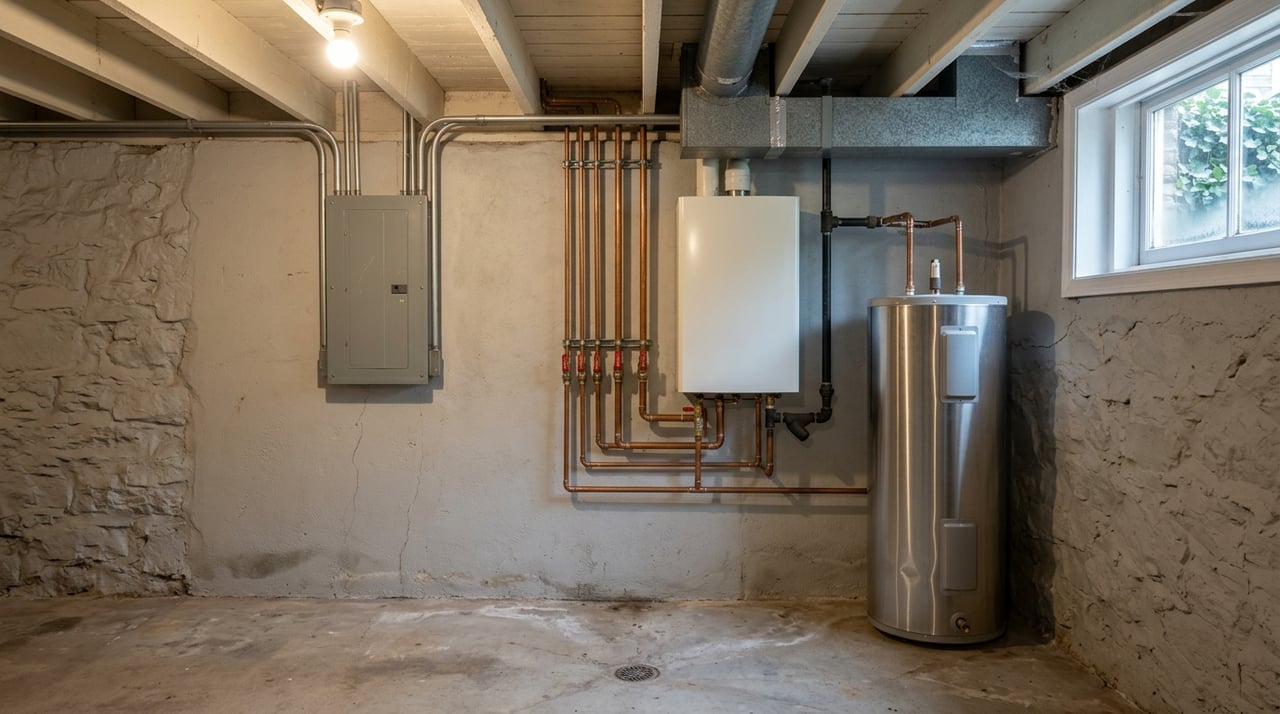
Watertown’s multi-family inventory often includes older New England housing stock, so your physical inspection needs to go beyond cosmetic appeal. The practical focus should be on the roof, structure, water intrusion, heating systems, plumbing, electrical systems, and common-area life-safety items.
That does not mean every older property is a bad opportunity. It means older buildings reward careful review. A nice renovation on the surface should still be compared against system age, maintenance needs, and permit history.
Try to connect what the inspector sees with what the file shows. When site condition and city records tell the same story, your underwriting is usually on stronger ground.
Confirm Future Plans Before Pricing Them In
Many buyers look at a Watertown multi-family and see future upside. Maybe you are thinking about a unit-count change, an addition, a conversion, or a more substantial redevelopment plan. Before you bake that upside into your offer, confirm what approvals may be required.
Watertown states that no special permit, variance, or building permit for a site-plan-review project should be granted until the site-plan process is complete. For projects with four to nine residential units, the city’s design guidelines are considered as part of site plan review or special permit review.
That means timing matters just as much as feasibility. Public hearing schedules, filing requirements, and review periods can affect your closing timeline, carrying costs, and renovation start date. Build extra time into the deal if your business plan depends on approvals.
Future-use checklist
- Confirm parcel zoning on the city’s zoning map or GIS tools
- Verify whether the existing use is legal
- Confirm whether the proposed work is by right
- Determine whether site plan review applies
- Determine whether a special permit or variance may be needed
- Add extra time to your closing and renovation schedule
A Practical Due Diligence Mindset
The best Watertown multi-family buyers stay disciplined even when the property is competitive. They do not assume that current use is legal, that renovated space was properly permitted, or that rent figures automatically support the asking price. They verify each major piece of the story.
That approach does more than reduce risk. It helps you write cleaner offers, negotiate more effectively, and move forward with confidence when the property truly checks out. In a market where small details can have big financial consequences, detail management is part of the investment strategy.
If you are considering a Watertown multi-family and want a clear, local process for evaluating the numbers, the paperwork, and the property itself, schedule a free consultation with Vahan Sardaryan.
FAQs
What zoning issues matter when buying a Watertown multi-family?
- You should verify the parcel’s zoning district, whether the current unit count is permitted, and whether any planned addition, conversion, or redevelopment would require site plan review, a special permit, or a variance.
What lease documents should a buyer request for a Watertown multi-family?
- You should request signed leases or at-will agreements for each unit, amendments, the rent roll, security deposit records, last month’s rent status, notices, and any side agreements tied to occupancy or rent.
Why are security deposits such a big due diligence item in Massachusetts multi-family purchases?
- Massachusetts has strict rules on the amount collected, how the deposit must be held, and what disclosures are required, and the research report notes that mistakes can create treble-damage exposure.
What should a buyer inspect in an older Watertown multi-family?
- You should pay close attention to the roof, structure, water intrusion, heating, plumbing, electrical systems, and common-area life-safety items, then compare what you find on site with the permit history.
How should buyers use rent estimates for a Watertown multi-family?
- Public asking rents can help frame the market, but you should underwrite primarily to actual in-place leases, current collections, and recent closed rental comparables rather than advertised figures alone.
What permit history should buyers review for a Watertown multi-family?
- Buyers should review building permits, current permit status, code enforcement records, and planning or zoning information, especially for finished basements, attic spaces, added baths, egress changes, and major system upgrades.